대표전화



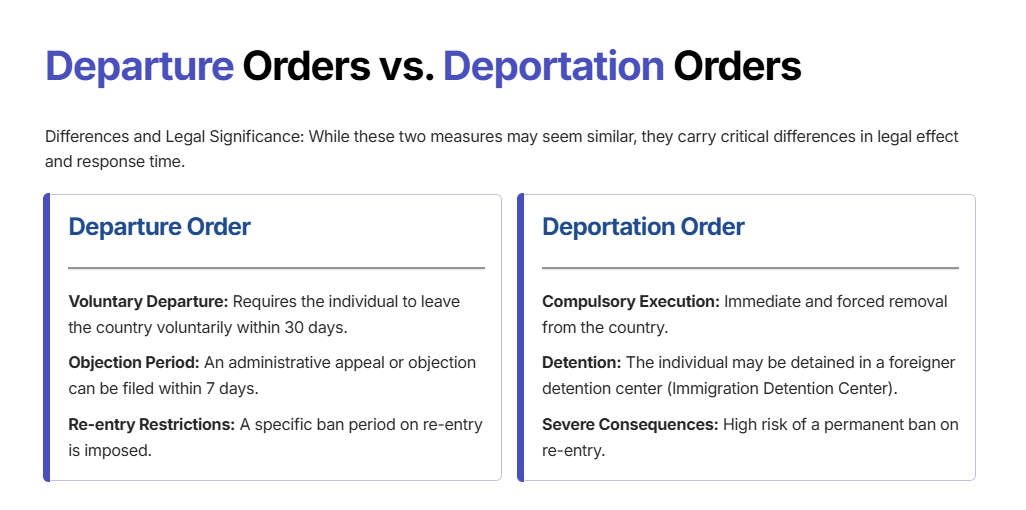
When people receive a Deportation Order or an Order to Depart, many think
"Can't I just leave for now, come back to Korea later, and then file a lawsuit?"
The moment you have this thought, the case is effectively entering a losing trajectory.
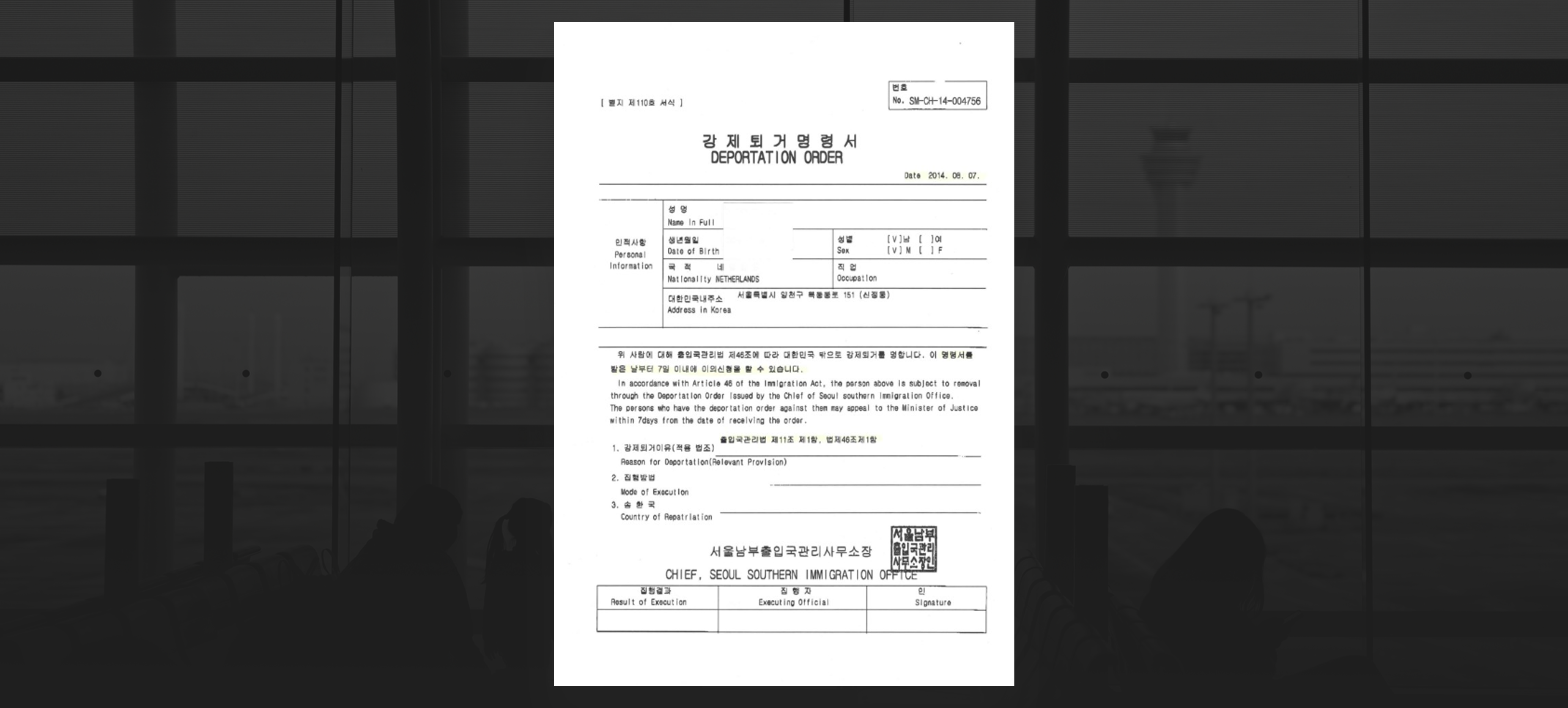
Deportation and Departure Orders are 'Irreversible Dispositions'
Among all administrative actions, deportation and departure orders are the most irreversible.
Once executed:
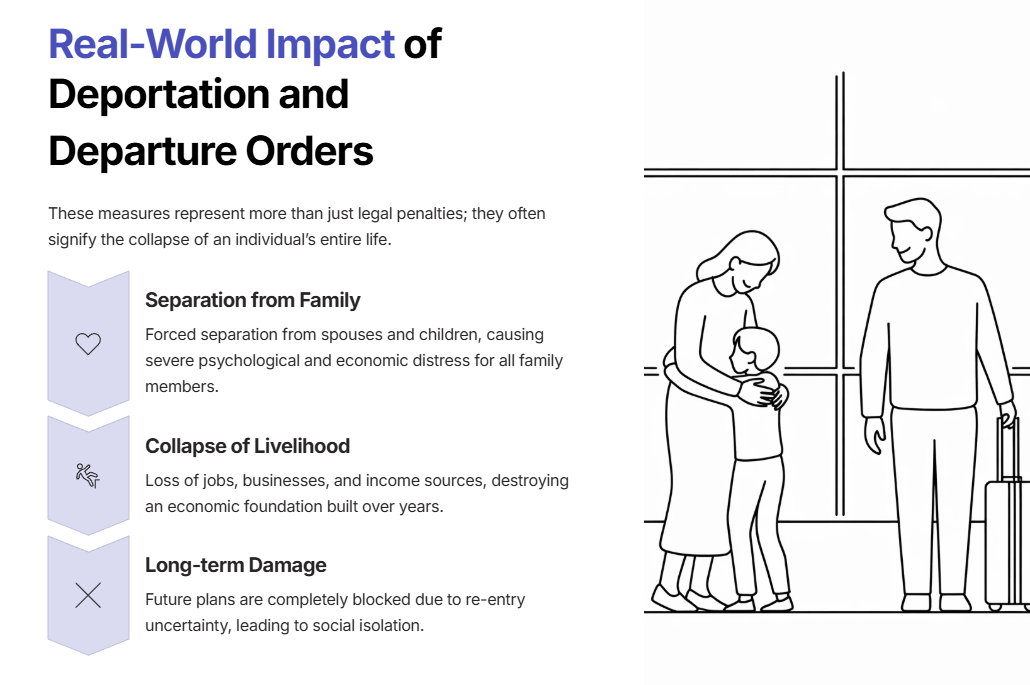
- Your domestic residency status is immediately lost.
- Your foundation of life, family relationships, and business activities are severed.
- Re-entry becomes uncertain, both legally and practically.
The essence of this disposition is simple: The moment it is executed, the very concept of 'recovery' disappears. Therefore, the battle in these cases is won or lost even before the main merits are argued.
Why "Winning Later" Doesn't Work
Focusing solely on the main lawsuit in a deportation case is a fatal strategy.
This is because:
- Once departure occurs, conducting a lawsuit from within Korea becomes extremely limited.
- The legal interest and effectiveness of the lawsuit practically collapse.
In short, when the person leaves, the "reality" that the court needs to judge disappears with them. Thus, these types of cases are often decided at the Stay of Execution stage, not the final judgment.

A Stay of Execution is Not an 'Option' in Deportation Cases
In these cases, a Stay of Execution is not just something that is "good to try." It is the only starting point.
The question the court asks during the Stay of Execution stage is clear: "If departure occurs, can this damage be recovered through a later judgment?"
The answer is always the same: It is impossible.
This is why courts most clearly recognize "irreparable harm" in deportation and departure order cases.
Dismantling the Government’s Argument of "National Order and Public Safety"
In immigration cases, the administrative agency almost inevitably argues: "Immediate execution is necessary for national order and public safety."
However, this claim is not always accepted at face value. In practice, a distinction must be made between:
- Abstract claims of maintaining order.
- The existence of concrete and immediate danger.
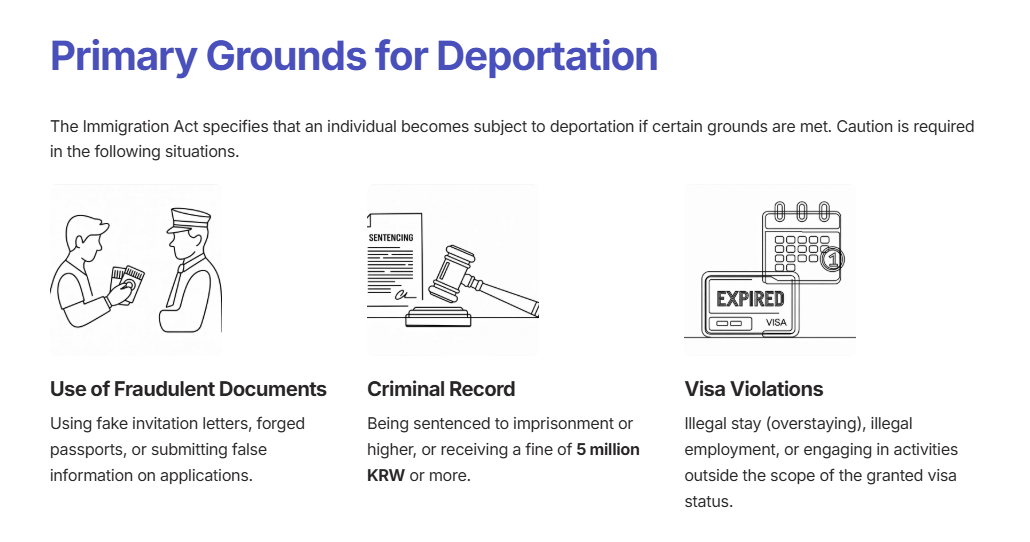
Having a criminal record or a residency violation does not automatically mean immediate deportation is required. A Stay of Execution is not a procedure to deny national order; it is a procedure to keep the person in place until a judgment is reached.
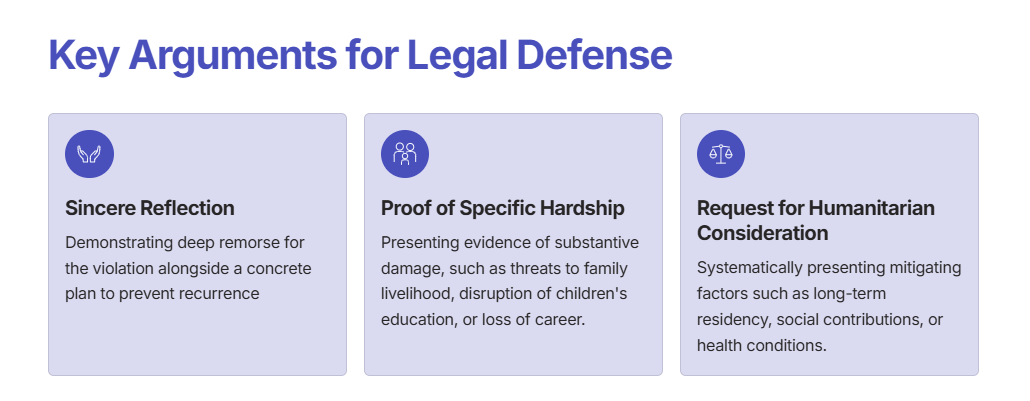
Illegality Does Not Need to be 'Proven' at This Stage
In the Stay of Execution phase, any one of the following is sufficient:
- Possibility of overlooked circumstances (residency status, family relations, etc.).
- Potential violation of the Principle of Proportionality.
- Possibility of a formalized (formulaic) exercise of discretionary judgment.
The critical question at this stage is: "Is a judgment still possible even if we don't send this person out right now?" In most cases, the answer is “Yes.”

Click here to be redirected to the consultation application page.
The Most Dangerous Decision in Deportation Cases
The most dangerous thought is: "Let's leave first and think about it later."
In deportation cases, departure is equivalent to the termination of the case. Therefore, these cases must always start with this premise: Before arguing illegality, we must first determine if the person can be sent out right now.
If you miss this window, even a winning judgment will no longer function.


Author: Seung-woo Lee | lawyer
- Bachelor of Laws (LL.B.), Konkuk University
- Passed the 47th Judicial Examination
- Completed the Judicial Research and Training Institute (37th Class)
- Certified Criminal Defense Specialist, Korean Bar Association
- Certified Insolvency & Bankruptcy Specialist, Korean Bar Association
0
칼럼 소식이 도움이 되었다면
상단의 좋아요 버튼을 눌러주세요